News

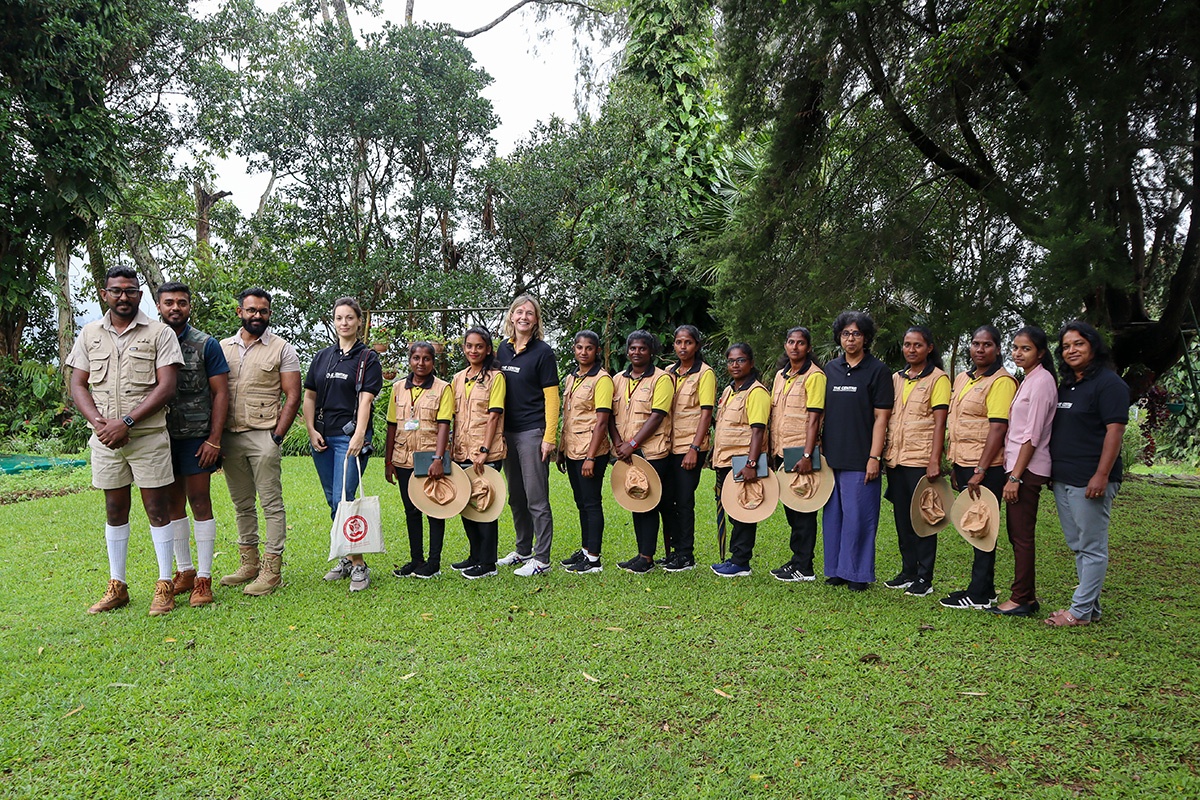
Photo: The Centre's team with the first cohort of female supervisors at Talawakelle Tea Estates in 2023
As the CEO of The Centre for Child Rights and Business and the Seal Owner of the Mother and Child Friendly Seal for Responsible Business, I have visited Sri Lanka many times. Each visit leaves me with the same contradictory sentiment: Looking at the rows of women plucking, I can’t ignore the hardship many of them have been going through, and I know the conditions in tea gardens, regardless of whether it’s a smallholder or plantation, are often tough, unfair and challenging – to say the least. However, I can’t help but see the beauty of the tea gardens and the surroundings, the dignity, resilience and pride of tea harvesters, and share the excitement of plantation managers and owners about the quality of their product. While tea has been brought to Sri Lanka from India, it has since become part of Sri Lanka’s culture and landscape. And despite or maybe because of the difficulties, it’s clear to me that Sri Lanka’s tea industry is worth fighting for.
Unfortunately, the future of the tea industry is not guaranteed. On top of environmental challenges, the tea sector has an age problem. Young people in the tea sector often show little interest in staying. Recent studies reinforce what many of us have observed on the ground. A 2025 University of Kelaniya study found that the out-migration of youth from plantation jobs has had a direct and measurable impact on tea production and export capacity.
The reasons to leave are manifold. They leave to escape poverty, low wages and in particular, limited prospects. Young parents in tea communities worry about access and the quality of education. All of this is further exacerbated by the stigma that often surrounds tea workers. The work is physically demanding, but nevertheless systematically undervalued, and offers little upward mobility. As a result, the tea sector is left facing an acute labour shortage that threatens productivity, export performance and long-term resilience.
The tourism sector is facing a similar challenge. A recent study by the National Human Resource Development Council (NHRDC) warns that unless we tackle skills gaps, worker migration, and gender inequality, the sector’s growth could stall. Labour shortages are only part of the story. There’s also a stark gender imbalance: men account for 76% of the hotel and tourism workforce. Safety concerns, social stigma, inflexible working hours and limited access to childcare all make it harder for women to participate fully.
But here is where the opportunity lies. If the tea and tourism sector can offer young people a route into dignified, meaningful work, these key industries can not only address labour shortages but also prevent child labour and strengthen the sustainability of their entire value chains.
I have witnessed what this looks like in practice. One example that stayed with me is Talawakelle Tea Estates’ female supervisor programme. Many of the 24 young women in the first cohort were daughters of tea harvesters. Their pride was palpable. They were stepping into supervisory roles, breaking gender norms and showing their families that progression within the sector is possible. It was a glimpse of what the future of tea could look like if the right investments are made.
There are other promising pathways too. The Centre’s Access-to-Decent-Work for Youth (AD-Y) programme is designed to give marginalised, vulnerable or unemployed youth – including those previously engaged in hazardous work – a structured route into decent work, training, mentorship and career progression. The programme has already been implemented in 109 factories and production sites across eight countries, creating safe jobs for more than 500 youth. It supports employers as well, equipping them with the systems and training needed to run these programmes effectively and sustainably.
When embedded into plantation or hotel operations, AD-Y does more than fill vacancies. It makes estate and tourism work appealing to young people and prevents child labour by offering a legal, safe alternative with real prospects. This is exactly what the Mother and Child-Friendly Seal for Responsible Business seeks to institutionalise. Through the Seal, we work with tea and tourism companies in Sri Lanka to build lasting structures for child protection, youth development, decent work and family-friendly practices.
We are already seeing signs of impact. A 2024 survey of 252 young workers in an AD-Y programme found that 17 per cent felt more hopeful about their futures after joining. That sense of hope is the foundation of a stronger workforce and a stronger industry.
For Sri Lanka’s tea and tourism sectors to remain sustainable, it must evolve. Short-term fixes will not bring youth back to the plantations and accommodation providers. What is needed is a systemic, industry-wide shift that makes plantation and hotel work dignified, skilled and aspirational.
Access to Decent Work for Youth programmes, supported by frameworks like the Mother and Child-Friendly Seal, offer a clear path forward. They give young people a reason to stay and a reason to believe in the future of the sector. And perhaps on my next field visit, I will finally see not just the older generation keeping the industries alive, but a new generation stepping forward with confidence and pride.
[1] https://rsisinternational.org/journals/ijriss/articles/impact-of-job-satisfaction-on-the-young-community-engaged-in-the-plantation-jobs-evidence-from-sri-lanka/#:~:text=The%20plantation%20industry%20can%20be,tea%20production%20and%20export%20capacity

By using this website, you agree to our use of cookies. We use cookies to provide you with a great experience and to help our website run effectively.





