Resources
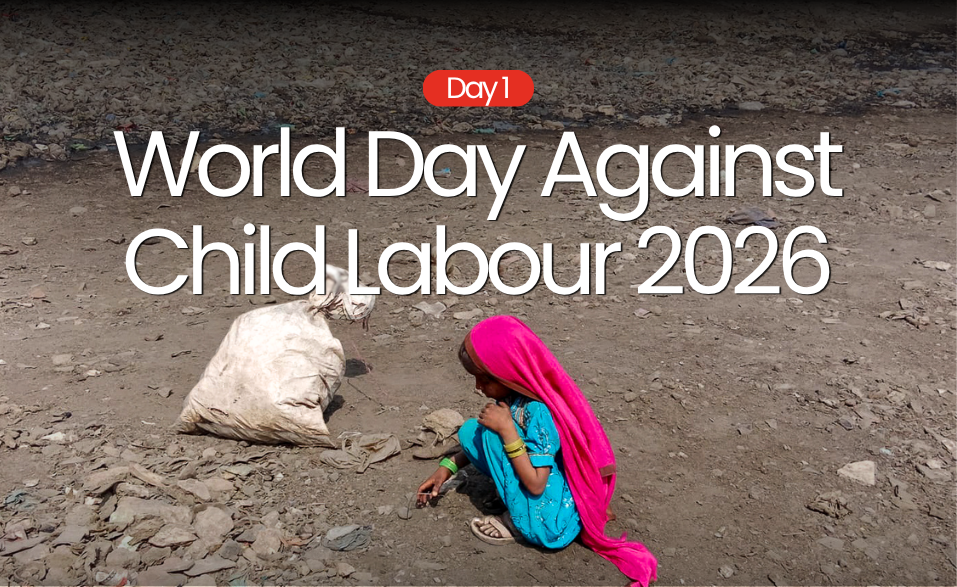
In 2023, Save the Children and The Centre for Child Rights and Business published a study with a deliberately provocative message: Zero tolerance alone is not enough.
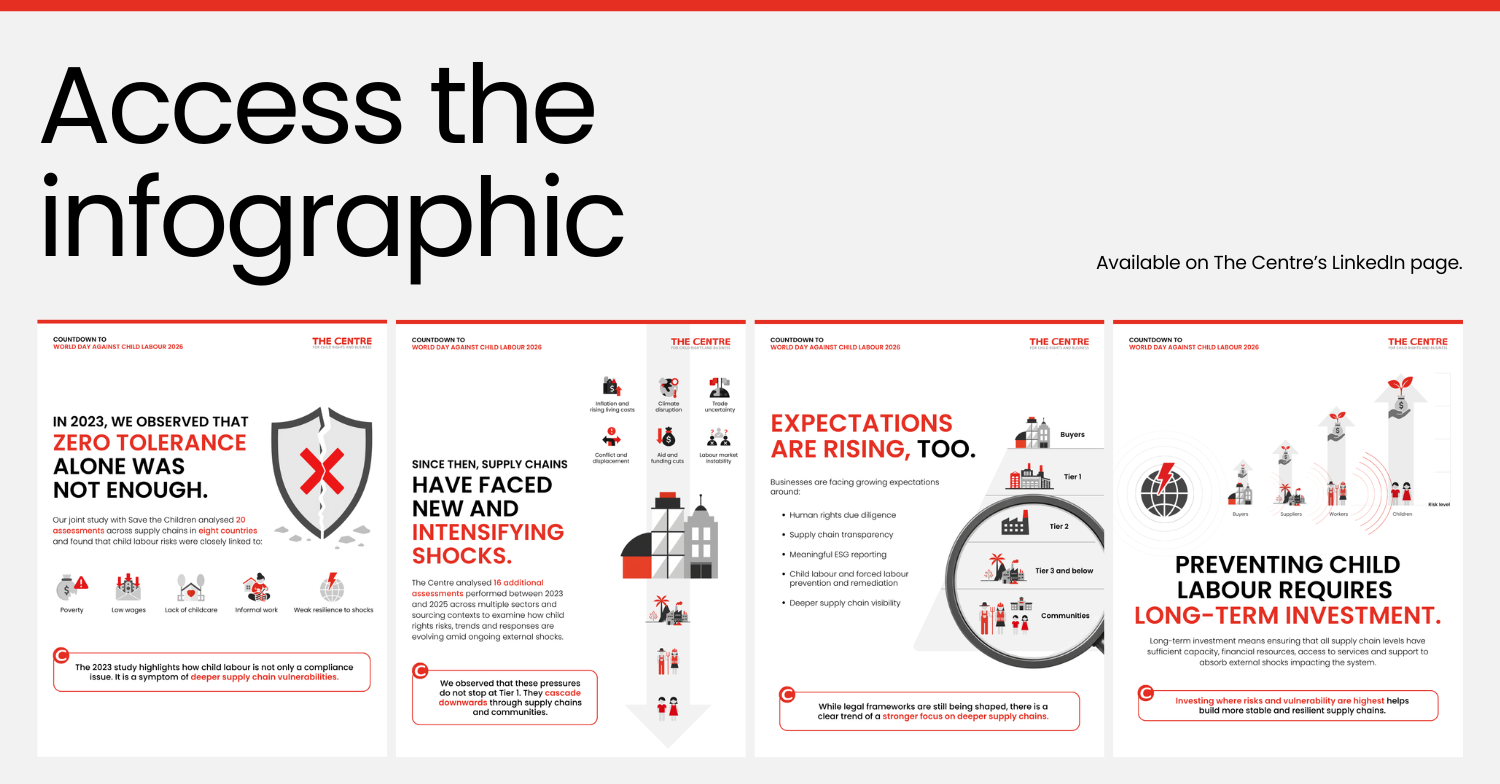
At the time, the world was still grappling with the aftershocks of COVID-19. Our study—based on 20 child rights and human rights assessments across eight countries—found something deeply uncomfortable for many businesses: child labour is omnipresent in our supply chains and rarely an isolated compliance failure. It is often the visible symptom of deeper structural vulnerabilities within global supply chains.
Low incomes. Poverty. Informal work. Weak social protection. Lack of childcare. Debt. Unstable sourcing practices. Migration pressures. The risks were interconnected, layered and systemic. And in many cases, they were being pushed downwards into lower tiers of supply chains, into vulnerable communities and, ultimately, onto children.
Now, almost three years later, we decided it was time to take another look because a lot has happened in the world since then. Our 2023 study already showed that supply chain systems were deeply vulnerable and often unable to prevent pressure from cascading downward onto workers, communities and children. Since then, we have carried out many more assessments across multiple sectors and countries, including an in-depth analysis of 16 assessments completed by the end of 2025.
What we found is not that the risks have fundamentally changed, rather, the original findings have been reinforced. The external shocks of recent years have exposed just how unprepared many supply chains still are to absorb instability without transferring the consequences onto the most vulnerable people within them.
We are no longer only talking about post-pandemic recovery. We are talking about inflation eroding already inadequate wages. We are talking about rising debt burdens on families. We are talking about climate disruption affecting livelihoods and labour markets. We are talking about conflict, trade uncertainty, geopolitical instability, international aid cuts, increasing household costs and economic insecurity in sourcing countries.
At the same time, expectations on business have grown. Human rights due diligence requirements have expanded significantly since 2023 and continue to do so. ESG scrutiny and reporting are intensifying. The EU Forced Labour Regulation and related implementation guidance will place even greater focus on deeper-tier supply chain risks and severe labour rights violations.
Yet despite all of this, one reality continues to glare at us across our on-the-ground work: supply chains are still structured in ways that leave lower-tier suppliers, workers and communities absorbing the impact of external shocks with too little support, investment or stability from buyers.
We see it in households struggling to keep children in school as living costs rise. We see it in communities where unstable incomes and debt push children into the worst forms of child labour. We see it in sectors where subcontracting and informalisation reduce visibility and accountability. We see it in artisanal mining communities where child labour risks intensify as economic pressures deepen. We see it in migrant communities where undocumented children remain largely invisible to protection systems.
The language we often use in sustainability discussions can sometimes feel abstract: “risk mitigation”, “due diligence”, “compliance systems”, “supply chain transparency”. But behind those terms are real children. Children carrying heavy loads in mining communities. Children exposed to hazardous chemicals working in agriculture. Children leaving school because their families can no longer absorb another financial shock. Children entering informal work environments long before they should. Many of these situations do not emerge because businesses intentionally want harm to occur. They emerge because supply chain systems, including purchasing practices, are rarely designed to foster sustainable, stable business relationships that generate shared prosperity across the chain. Instead, today’s supply chains are primarily structured to optimise efficiency, minimise costs and maximise short-term profits. ESG, human rights due diligence (HRDD) and compliance requirements are then layered onto these systems like a hat added for shade in the blazing sun. The hat never quite fits.
We agree that companies cannot be held solely responsible for the structural challenges within sourcing countries. Governments, economic systems, conflict, climate pressures and global inequalities all shape these realities. But businesses do operate within—and benefit from—these systems. And where supply chain structures create cost advantages while pushing instability downward, companies also have leverage and, most importantly, responsibility.
If workers’ incomes are continuously insufficient to support decent living standards, vulnerability increases. If households cannot withstand inflation or climate shocks, children become more exposed to labour risks. If sourcing practices create instability in supply chains, risks increase and trickle down the chain. At the same time, if monitoring and prevention systems are weak, risks and issues become harder to detect and easier to ignore.
This is why businesses need to think beyond audits and short-term compliance. Stronger supplier relationships, longer-term partnerships, responsible purchasing practices, investments in supplier capacity and support for community-based prevention and remediation systems are all part of what meaningful child rights and human rights due diligence should look like in practice.
Compliance alone cannot solve this. Audits alone cannot solve this. Import bans and zero tolerance alone cannot solve this.
What we need are supply chains where buyers actively invest in stronger and more equitable systems that prevent risks from being pushed onto vulnerable workers, communities and children in the first place.
The encouraging reality is that we have seen positive examples of where this is possible, including through joint efforts.
As World Day Against Child Labour approaches, we reflect on what our risk assessment findings mean for both businesses and the people linked to supply chains. Over the coming days, we will share insights and reflections from our assessments and showcase practical approaches that businesses are implementing.
We hope you will follow the campaign, engage with the findings and arguments in the comments section, and reflect on what more stable and sustainable, rights-respecting supply chains should look like in a world increasingly defined by instability and uncertainty. Because ultimately, the question is not whether shocks will continue; the question is who will continue paying the price when they do.
View the full infographic on The Centre's LinkedIn page →

By using this website, you agree to our use of cookies. We use cookies to provide you with a great experience and to help our website run effectively.





