Our Impact
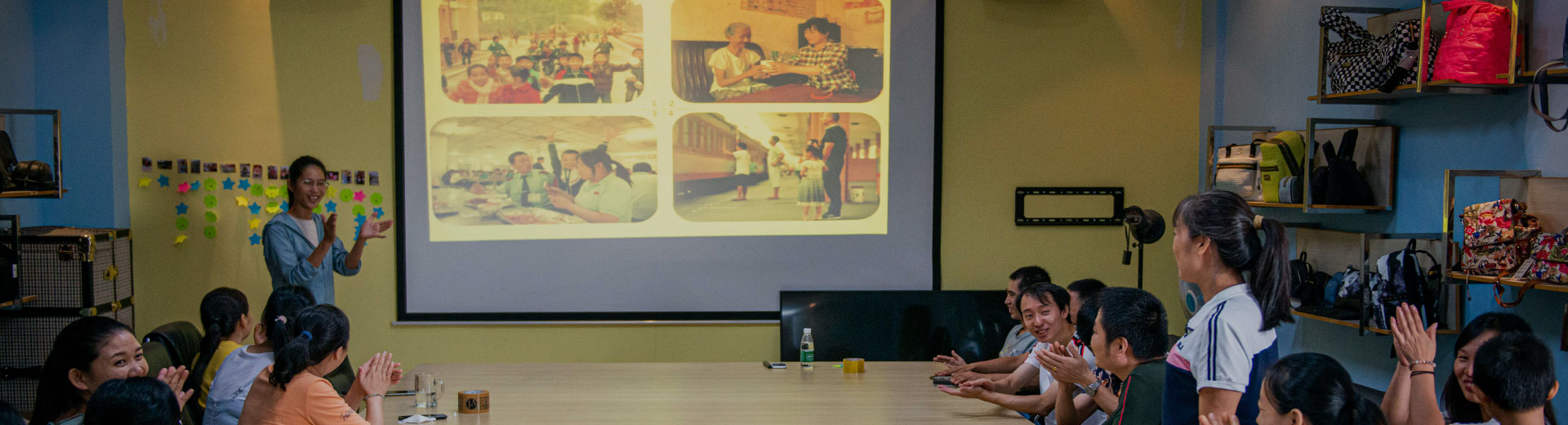
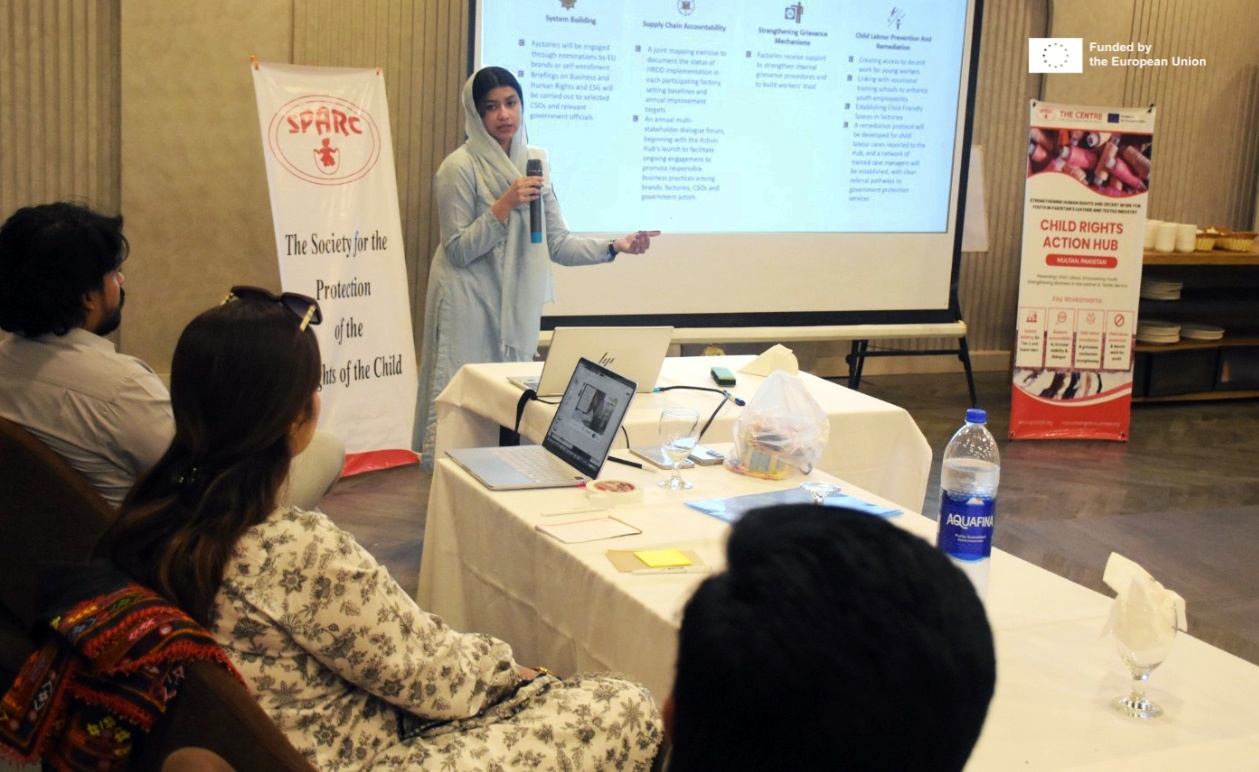 Photo: The Centre's staff delivering part of the training as part of the EU-funded Child Rights Action Hub initiative
Workplace grievance mechanisms are often one of the most overlooked tools in human rights due diligence. When workers can safely raise concerns, businesses are better equipped to identify risks early, resolve issues effectively and strengthen relationships across their supply chains.
Helping suppliers put these systems into practice was the focus of a recent training delivered by The Centre for Child Rights and Business for garment and leather factories participating in the Child Rights Action Hub Pakistan. Held in Karachi on 21 July in partnership with SPARC, the session forms part of a European Union-funded initiative to promote responsible business conduct and more sustainable supply chains in Pakistan.
Drawing on practical workplace examples, the training explored what makes a grievance mechanism effective, accessible and trusted by workers. Participants discussed how well-designed systems can help identify workplace concerns before they escalate, encourage open communication and strengthen accountability across factory operations.
The session also examined how grievance mechanisms fit within broader human rights due diligence systems, supporting businesses to strengthen supply chain transparency, align with international labour standards and demonstrate responsible business practices.
The Karachi workshop builds on similar training delivered in Multan earlier this year, reflecting the Action Hub's continued work to strengthen supplier capacity across Pakistan's garment and leather sectors.
Launched in 2025, the Child Rights Action Hub Pakistan supports businesses with practical tools, technical expertise and local partnerships to strengthen human rights due diligence and build more responsible supply chains. Through training, capacity building and collaborative action, the initiative helps businesses address child rights and labour risks while creating safer, more accountable workplaces for children, young workers and adults alike.
The training was well received by participating factories, with many reaffirming their commitment to strengthening workplace systems that protect workers' rights and contribute to more transparent, resilient and sustainable supply chains.

By using this website, you agree to our use of cookies. We use cookies to provide you with a great experience and to help our website run effectively.





