Resources
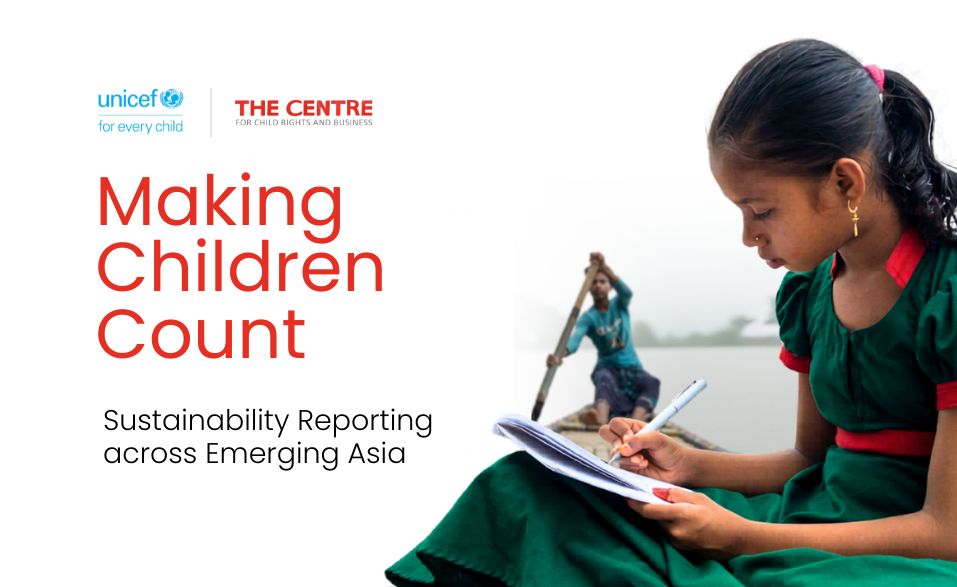
As sustainability reporting becomes standard practice across Asia, a new report developed by The Centre for Child Rights and Business for UNICEF shows that children's rights remain largely overlooked in corporate ESG disclosures. The findings highlight a significant gap between companies' human rights commitments and how they identify, manage and report on their impacts on children.
Making Children Count: Sustainability Reporting across Emerging Asia analyses the sustainability reports of 1,399 listed companies across nine Asian markets against 26 child rights indicators. It is one of the most comprehensive assessments to date of how businesses are integrating child rights into ESG reporting in the region.
The report finds that while nearly three-quarters of companies publicly commit to respecting human rights, very few demonstrate how they are addressing their impacts on children. Only one in 20 companies identifies children as stakeholders, and just one in 100 assesses the impacts of its business activities on children.
The gaps are particularly evident in areas where businesses can have significant impacts on children, including climate change, online safety, nutrition, child labour and family-friendly workplaces. For example:
Only 2% of companies mention children in their climate strategies.
Fewer than 10% of technology companies disclose measures to protect children online.
Only 3% of companies commit to responsible marketing practices for children.
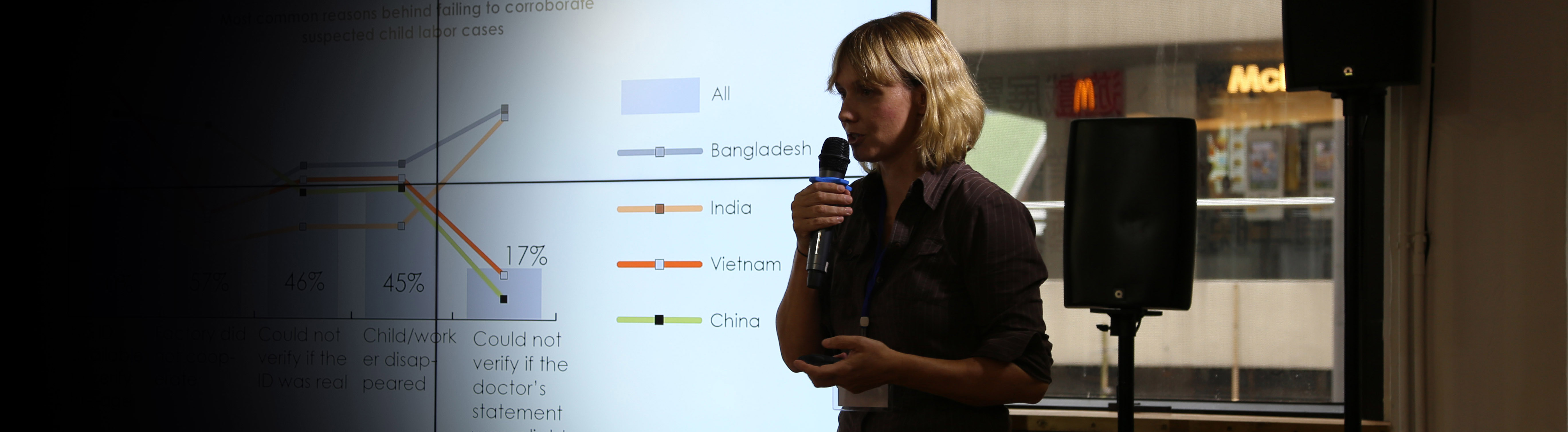
While 72% of companies have child labour commitments, only 2% explain how they remediate child labour cases when identified, and just 3% describe how they support suppliers to improve practices.
The findings suggest that many companies continue to view children primarily through the lens of philanthropy rather than as stakeholders who can be directly affected by business operations, products and services.
The report provides a benchmark for companies, investors, policymakers and sustainability professionals seeking to better integrate child rights into ESG strategies and reporting. It also highlights practical opportunities for businesses to strengthen their approach by moving beyond policy commitments towards identifying, managing and disclosing child-related risks and impacts.
An open methodology. Alongside the report, UNICEF and The Centre have published the complete assessment framework — free to reuse and adapt with attribution. Investors, companies, ESG raters and regulators can apply it to assess child-rights disclosure in their own portfolios or extend the research to more companies and markets worldwide.
Download the report and methodology guide


Making Children Count Report.pdf
Methodology Guide_Making Children Count - Sustainability Reporting across Emerging Asia.pdf.pdf

By using this website, you agree to our use of cookies. We use cookies to provide you with a great experience and to help our website run effectively.





